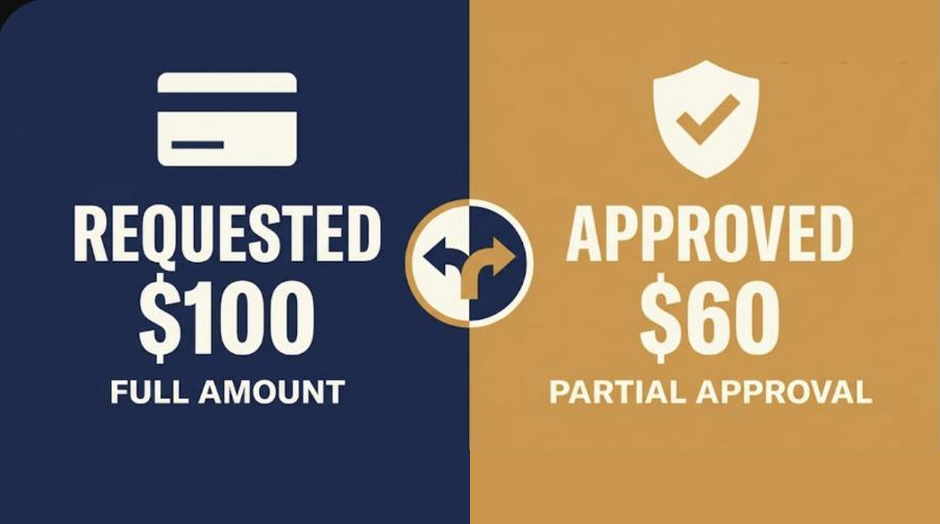
False Declines: A Hidden Revenue Leak in Payments
False declines reduce authorization rates and revenue. Learn why modern payment infrastructure now includes recovery layers beyond orchestration and retries.

Authorization rate is one of the few levers in payments that can increase revenue without requiring more customer acquisition, price changes, or geographic expansion. That is why payment approval performance has become a strategic priority across the ecosystem. Visa explicitly positions higher authentication and authorization approval rates as a path to more revenue, while Stripe frames authorization-rate management as a way to reduce legitimate payment failures that damage both revenue and customer experience.
Yet many payment stacks still treat declines primarily as a fraud outcome rather than a revenue design problem.
That framing misses a central issue in modern payments infrastructure: a meaningful share of declined transactions are not illegitimate attempts. They are legitimate customer purchases that fail because issuer systems are conservative, signals are incomplete, authentication was not satisfied, or transaction context introduces uncertainty. Stripe defines false declines as legitimate transactions that are incorrectly rejected by a bank or payment processor.
For merchants, PSPs, acquirers, and PayFacs, that makes false declines more than an operational nuisance. They are a structural source of lost revenue.
Why false declines matter economically
The economic impact of payment performance is not theoretical. Checkout.com, citing research conducted with Oxford Economics, reported that businesses across the US, UK, France, and Germany lost more than $50 billion in revenue in a single year due to falsely declined payments. The same research found that 45% of consumers would not retry a payment after a single false decline, and 42% said they would not return to the business after a failed payment attempt.
That is why authorization performance should be treated as a growth metric, not just an operational KPI.
A small uplift in approval rate compounds quickly at scale. Higher approval rates increase captured volume from existing customer intent. For platforms with recurring billing, subscription renewal flows, or enterprise merchant portfolios, that impact can extend across lifetime value, retention, and margin structure. This is revenue captured from demand that already exists, not revenue purchased through CAC.
Why issuer conservatism creates structural revenue loss
Authorization outcomes are not determined only by the merchant or PSP. They are the result of issuer-side decisioning.
Stripe notes that online authorization rates can be materially lower than in-person rates because issuing banks apply more conservative approval logic to ecommerce transactions due to higher fraud risk. Stripe also explains that issuer decisions are made using complex logic over ISO 8583 authorization data, and that many issuers return generic decline responses such as “05: Do not honor,” which makes recovery harder and more probabilistic.
From the issuer’s perspective, that conservatism is rational. Issuers are optimizing for fraud exposure, risk controls, portfolio performance, and compliance obligations. They are not optimizing for merchant revenue realization.
From the merchant’s perspective, however, that conservatism creates a direct revenue leak.
Why cross-border performance is harder
This challenge becomes more pronounced in cross-border commerce.
Adyen highlights that local payment processing can generate much higher authorization rates and lower transaction fees, and cites an example from FlixBus where local acquiring reduced bank declines by 21%. Stripe similarly notes that global acquirers often improve authorization rates for international transactions because they maintain relationships with banks around the world and are better positioned to optimize international payment performance.
This matters because approval performance is not uniform. It varies by issuer, geography, card type, transaction context, and acquiring setup. For global payment providers, cross-border scale can therefore amplify authorization volatility rather than smooth it.
Why orchestration helps - but does not solve everything
Modern orchestration stacks improve resilience by introducing routing logic, redundancy, and provider-level optimization. That matters. But orchestration alone does not eliminate issuer-side conservatism.
If the core issue is issuer uncertainty, incomplete authentication, poor data quality, or issuer-specific decision logic, routing alone may not materially change the result. In many cases, the constraint sits at the authorization boundary rather than purely in provider availability.
This is also why indiscriminate retries are not a real strategy.
Visa and Mastercard require more structured handling of declined authorizations. Visa’s guidance explains that issuers return category and decline codes that indicate whether a transaction can be retried, should be retried later, or should not be retried. Merchants are expected to update retry logic accordingly and avoid repeated attempts when the issuer has effectively indicated “do not try again.”
So the question is no longer whether a system can retry. The question is whether it can recover legitimate revenue precisely, selectively, and compliantly.
False declines are a recovery problem, not just a retry problem
False declines are best understood as high-probability legitimate transactions that fail under conservative or ambiguous conditions.
That failure can happen because:
- issuer fraud models are cautious,
- authentication was required but not completed,
- network or issuer response codes are too generic,
- payment data is insufficient or poorly enriched,
- or transaction context triggers uncertainty even when cardholder intent is legitimate.
Generic retry logic often increases traffic without increasing issuer confidence. Poorly timed or excessive retries can also work against scheme guidance and reduce effectiveness over time.
Recovery therefore needs to be treated as a dedicated infrastructure capability.
The case for a recovery layer in the payment stack
A mature payments architecture now typically includes multiple optimization layers:
- processing and acquiring connectivity,
- fraud and authentication controls,
- orchestration and routing logic,
- and increasingly, recovery infrastructure.
The role of the recovery layer is distinct. It is not generic orchestration and it is not a static retry engine. It is designed to identify legitimate, high-probability declines and recover them under optimized conditions during the authorization lifecycle.
That is the layer Better is built for.
Better operates as advanced real-time guaranteed payment recovery infrastructure, designed to recover high-probability false declines with economics tied directly to successful recovery outcomes. In practice, that means treating recovery as a precision capability at the authorization boundary - not as a blunt retry policy applied after the fact.
Why this matters strategically for PSPs, acquirers, and PayFacs
For infrastructure providers competing on enterprise performance, approval uplift is not a cosmetic metric. It shapes:
- merchant revenue capture,
- retention and renewal dynamics,
- cross-border viability,
- and platform margin expansion.
Checkout.com’s research found that payment performance influences both retry behavior and customer loyalty. Visa and Stripe both position authorization optimization as a lever tied directly to revenue outcomes.
That is why false declines should be viewed as a structural revenue leak embedded in payment infrastructure.
The question is not whether declines will happen. They will. The real question is whether the stack is designed to recover legitimate revenue when issuer conservatism overcorrects.
In mature payment ecosystems, authorization performance is no longer just an operational KPI. It is a strategic infrastructure lever.