Engineering insights on payment authorization, decline recovery, and modern card infrastructure.
Smart dunning decides whether and when to retry a failed subscription charge, instead of running a fixed schedule. How it works and what it changes.
Payment recovery turns declines that were never real refusals into approvals. What it covers, what the card network rules allow, and where it stops.
A technical guide to CIT and MIT flagging: what separates the two, how stored credentials must be identified, and why the wrong flag causes declines.
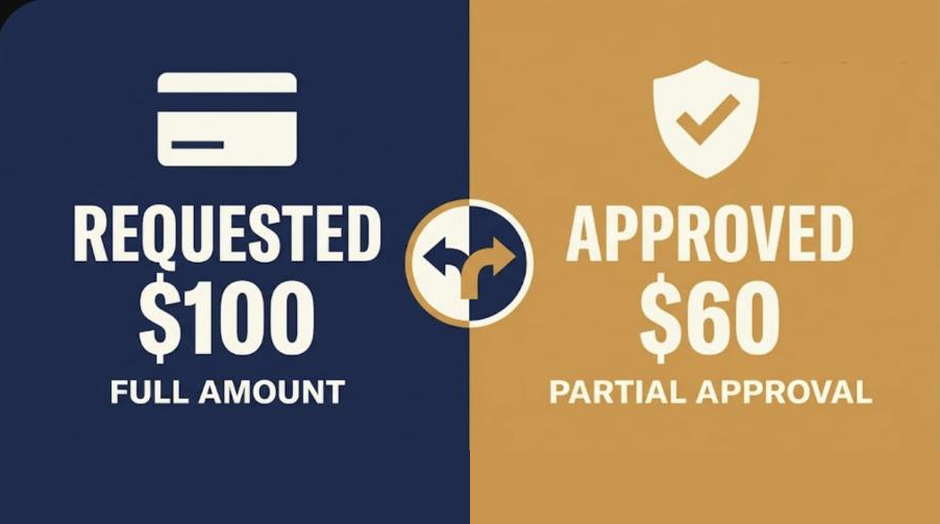
A technical guide to partial authorization: how issuers approve less than the requested amount, why it happens, and what merchants and processors must do.
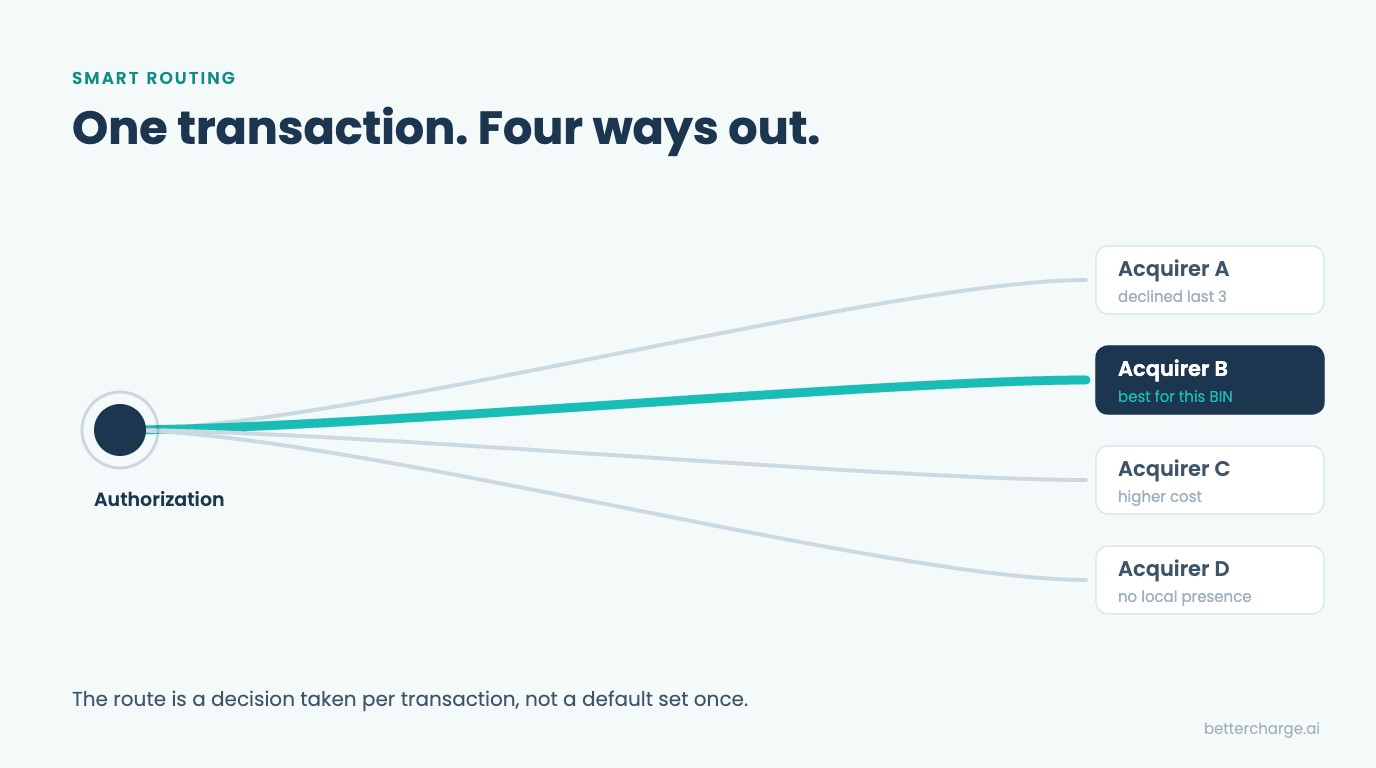
A technical explanation of payment orchestration and smart routing, and how routing decisions impact authorization rates and payment performance.
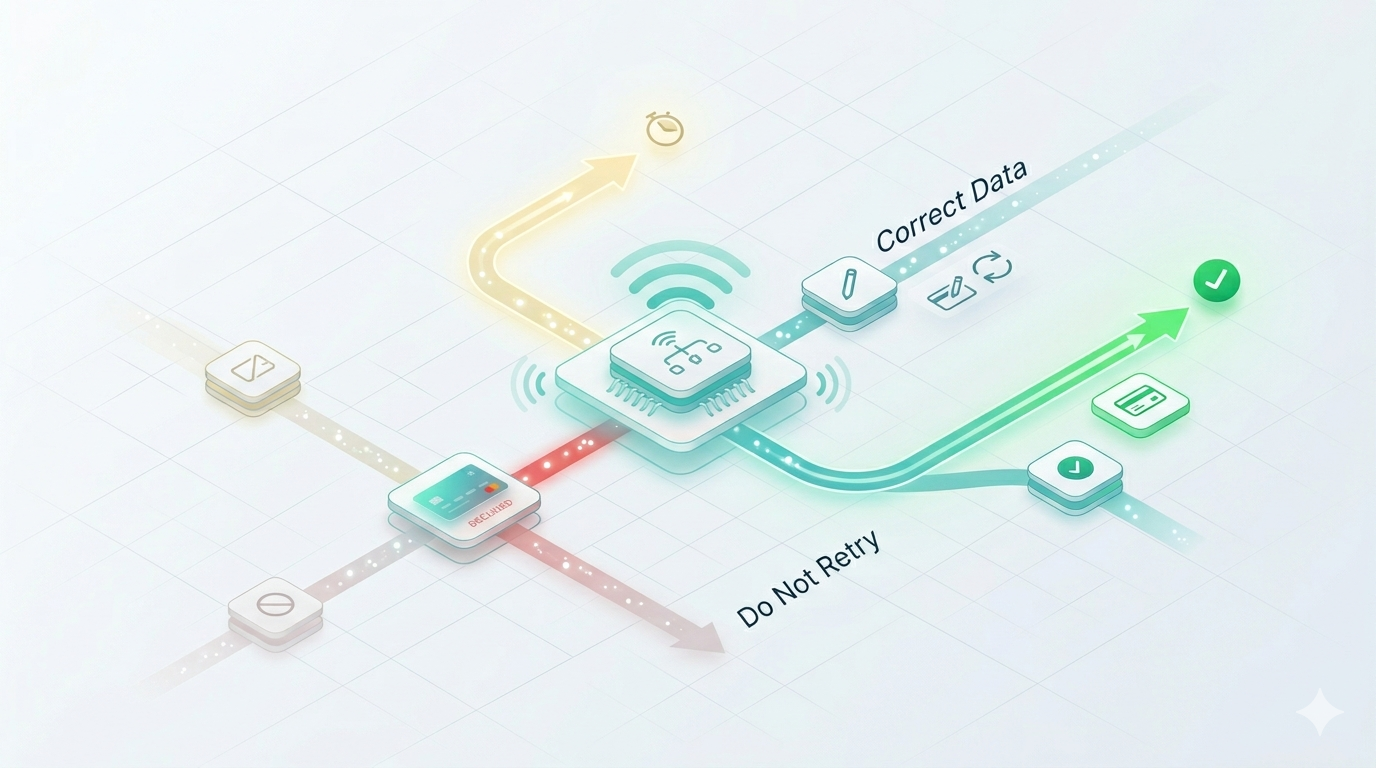
A technical guide to Visa decline categories and Mastercard merchant advice codes, and how issuer signals should shape retry policy and orchestration.
How retry logic, timing, routing and issuer-aware decisioning affect recovery rates, customer experience and overall authorization performance.
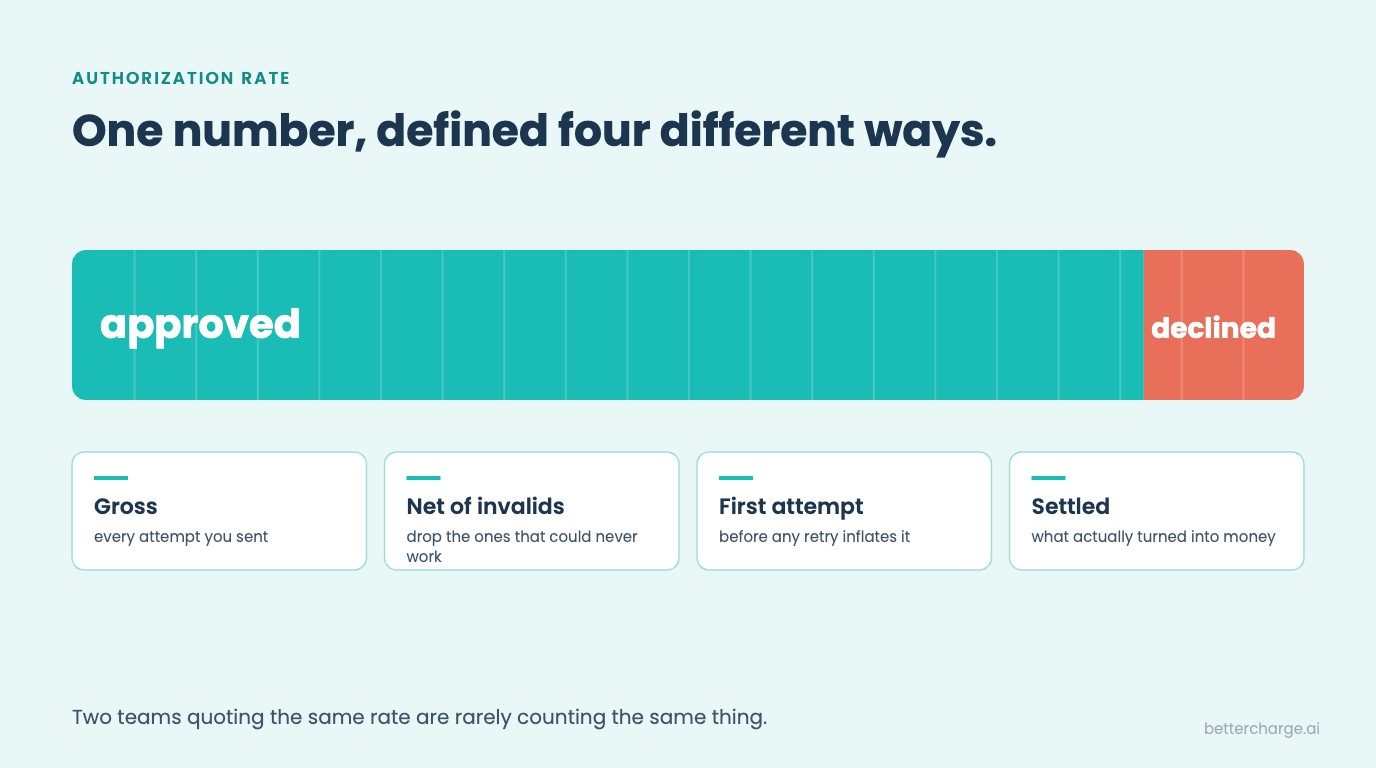
A technical guide to payment authorization rates: how issuers approve transactions and why authorization performance is a core payments metric.
How a card payment travels from merchant to issuer in milliseconds, and why understanding authorization helps you raise approval rates.
False declines are legitimate payments wrongly rejected by issuers. See how treating them as infrastructure, not retry logic, lifts authorization rates.
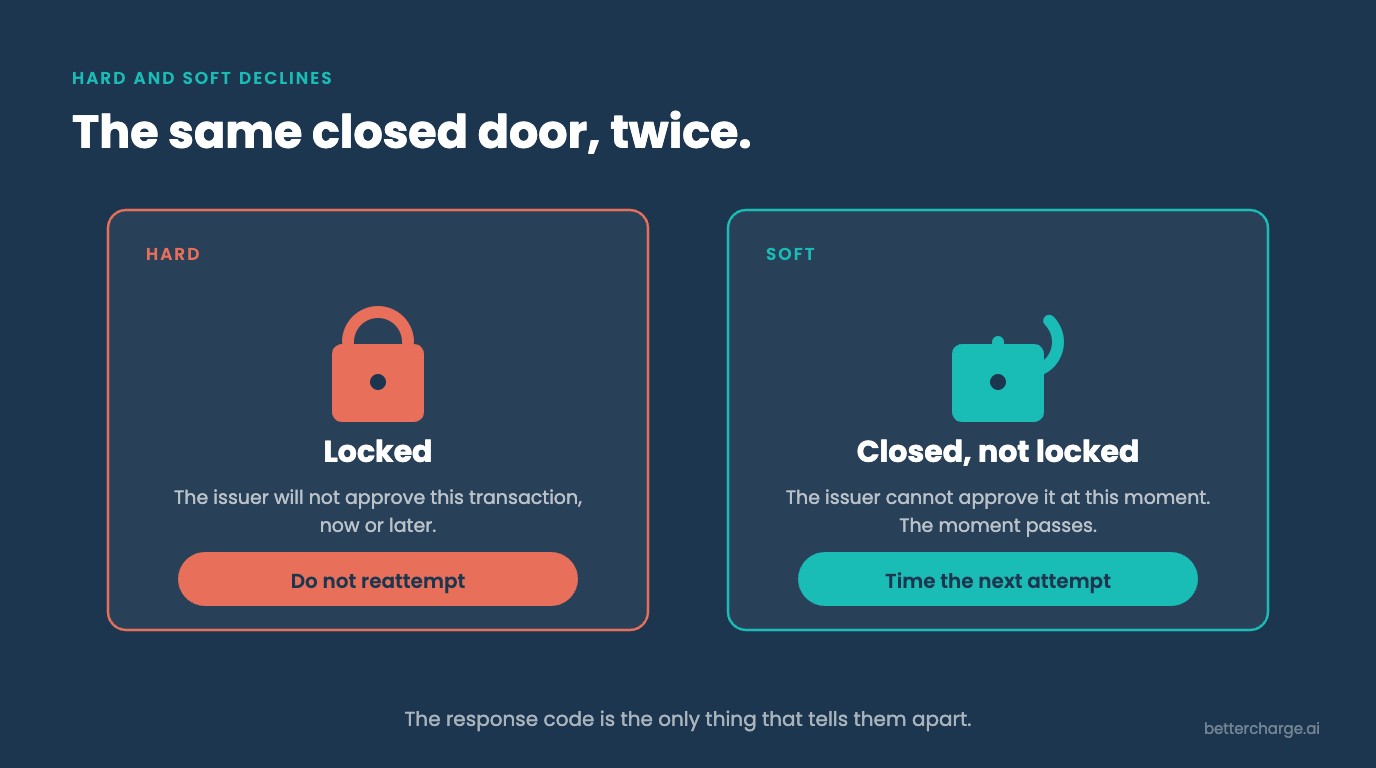
Soft declines are temporary authorization failures driven by probabilistic issuer decisions. Treating them as infrastructure helps recover legitimate payments.
A technical breakdown of Visa and Mastercard network tokenization: token provisioning, lifecycle management, and the impact on authorization rates and security.
Network tokenization vs account updater: how each works, when you need both, and the effect on fraud prevention, approval rates and PCI compliance.
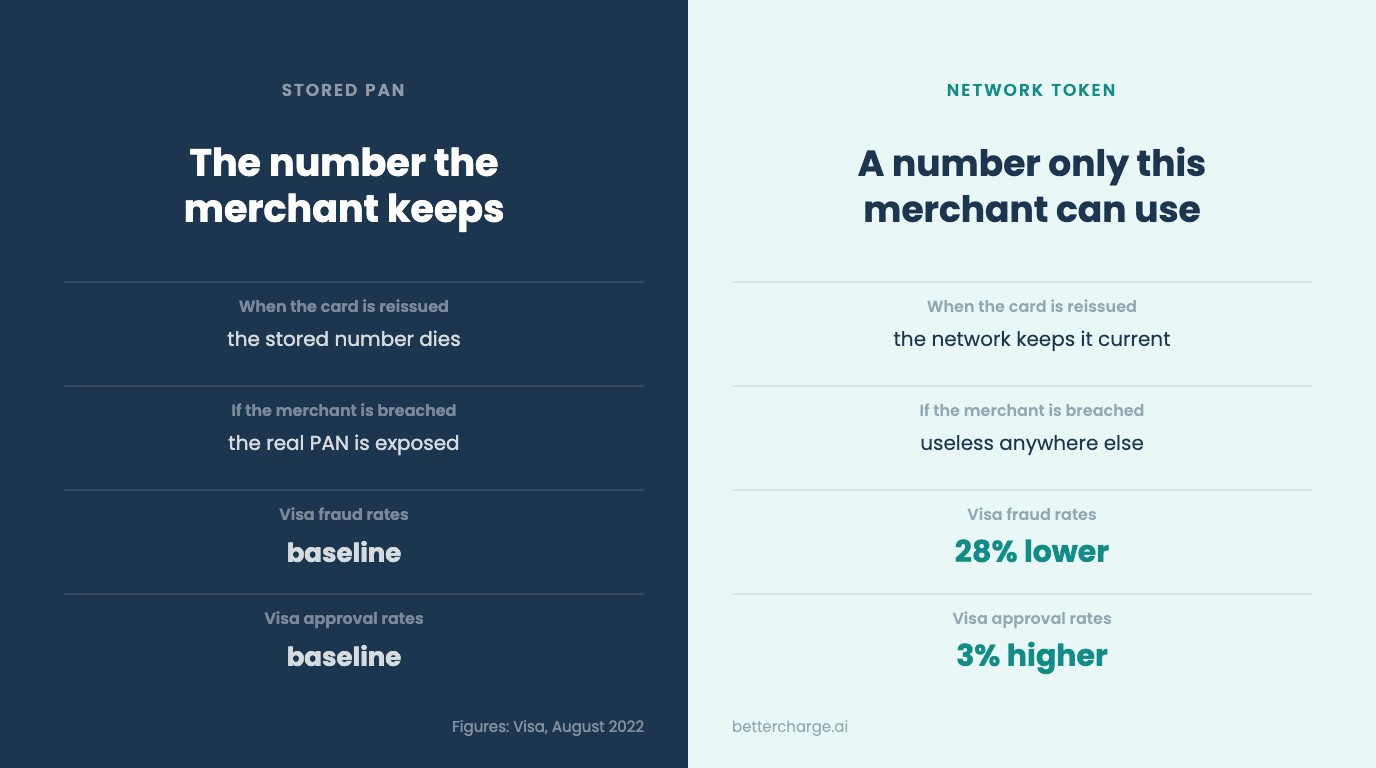
A network token is a dynamic, secure credential, not a static card number. See how it improves authorization rates and reduces false declines.
The lost sale is the smallest part of it. What a decline really costs depends on which category it falls into, and on one number no merchant can see.
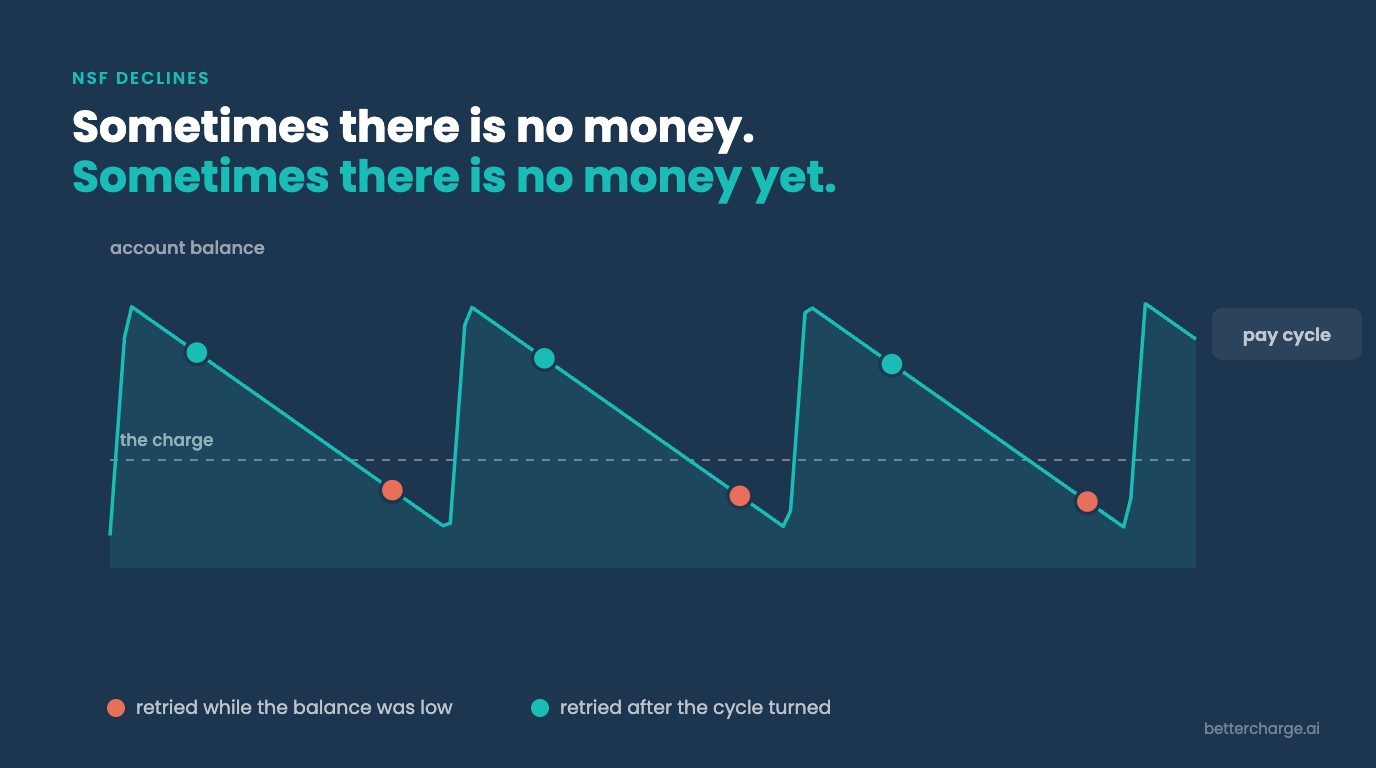
NSF declines make up nearly half of card rejections. See how smart retries, card updates, routing and machine learning scoring plug the leak and cut churn.
Stay updated with interesting articles and news